
Rubber Flail Components
A flail mower or mulcher is primarily steel (rotor bar, hammer blades, housing) but it contains several rubber components that are routinely overlooked until they fail and cause cascading equipment problems. The mounting bushing at the flail blade attachment point takes the full rotational impact load every time a blade strikes material; when it wears through, the blade begins to strike metal-to-metal, accelerating rotor bar damage. The debris deflector apron across the front of the mower deck keeps cut material contained under the rotor; when the apron tears, debris throws forward and creates a safety hazard for the operator and bystanders. The rotor housing end seals and bearing cavity seals fail from UV and ozone in outdoor service, allowing moisture and chaff to contaminate bearings and accelerate failure.
Wayne Rubber also manufactures solid rubber crop-handling components (harvester fingers, tree shaker pads, and crop deflectors) for agricultural equipment where a rubber flail element contacts living plant material rather than cutting it. These non-cutting rubber elements are a distinct product from steel hammer blades and are sourced from rubber molders, not blade suppliers.
Wayne Rubber manufactures custom molded rubber components for flail mowing and crop-handling equipment in Wixom, Michigan. Mounting bushings, impact buffer stops, debris deflector aprons, housing seals, harvester fingers, and tree shaker pads in natural rubber, EPDM, neoprene, HNBR, and polyurethane to customer drawing.
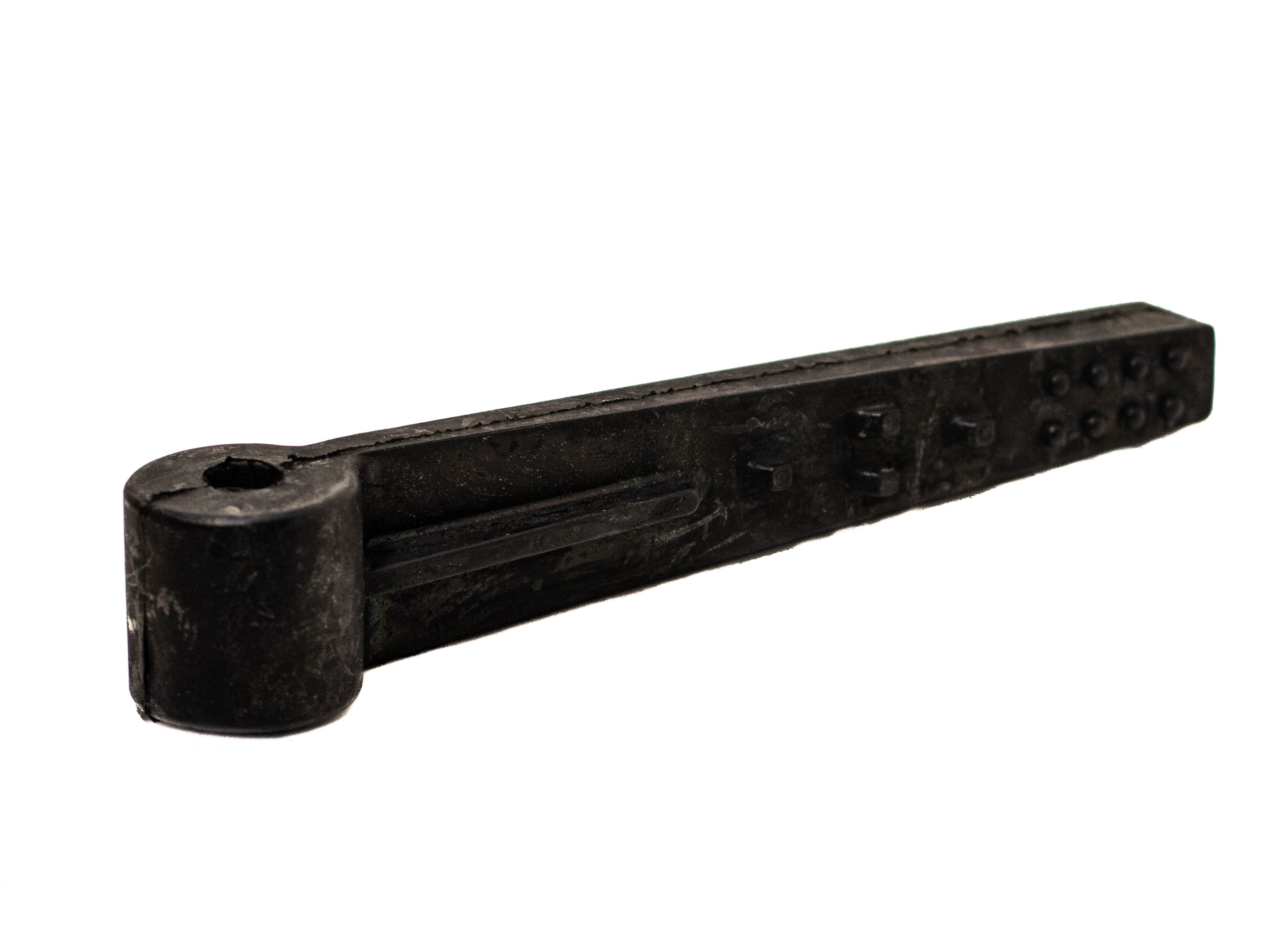
Five Rubber Elements in Flail Mowing and Crop-Handling Equipment
Each of these rubber components performs a distinct function in flail equipment. All five are OEM-designed, application-specific parts sourced from custom rubber molders rather than from blade suppliers or equipment distributors.
A rubber or rubber-bonded bushing at the attachment point where each swinging flail blade or hammer is pinned to the rotor bar. The bushing absorbs the rotational impact shock as the blade strikes material and returns to rest position between strikes, isolating the impact force from the rotor bar attachment hardware. Function: without functional mounting bushings, every blade strike transmits full impact force directly into the rotor bar pin holes, causing progressive wear of the metal-to-metal interface and eventual hammer or blade loss. The bushing is a sacrificial wear element designed to be replaced at regular intervals rather than allowing rotor bar damage to accumulate. Critical properties: the bushing must have high resilience to return the blade to rest position rapidly between strikes; high tear resistance at the pin interface to resist the concentrated bearing stress from the pivot pin under repeated impact; and compound resistance to the UV, ozone, and moisture of outdoor operation. Natural rubber is the correct base compound for rotational impact bushings because of its superior resilience and tear resistance under dynamic repeated loading. HNBR where engine oil or hydraulic fluid contact at the rotor is present alongside outdoor exposure.
The rubber apron or curtain that hangs across the front opening of a flail mower housing, deflecting cut material downward and preventing debris from being thrown forward toward the tractor and operator. On rear-discharge machines, a rear rubber flap performs the same containment function. Function: flail mowers operating at rotor speeds of 1,000 RPM or higher generate significant projectile energy in cut material. The deflector apron is the primary barrier that keeps material contained within the cutting chamber long enough to be mulched rather than thrown. A torn or missing apron is a serious operator safety issue on roadside and public area mowing equipment. Critical properties: the apron must resist tearing at the mounting edge under the sustained airflow and material impact load from the rotor; it must maintain flexibility in cold morning temperatures when the machine is started; and it must resist UV and ozone degradation over seasons of outdoor service. Neoprene is the standard apron compound for balanced UV, ozone, and tear resistance in outdoor mowing service. EPDM for roadsides and public spaces where longer UV service life is required. Wayne Rubber produces aprons to equipment-specific profile drawings with reinforced mounting edges.
Elastomeric seals at the bearing housings on each end of the rotor shaft, preventing chaff, dust, and moisture from entering the bearing cavities and contaminating the grease-lubricated bearings that support the rotor. On some designs, a rubber end plug seals the rotor tube itself, preventing debris buildup inside the rotor. Function: flail equipment operates in some of the harshest contamination environments of any agricultural machinery: dry chaff, wet crop residue, road grit, and standing water all present simultaneously. Bearing failure from contamination is one of the primary downtime causes on flail equipment, and housing seal condition is the primary factor determining contamination ingress. Critical properties: the seal must maintain its sealing lip contact under the centrifugal and vibration loads of a spinning rotor; it must resist the outdoor UV and ozone environment; and the lip compound must not harden over winter storage periods in cold climates. EPDM for rotor housing seals provides the best balance of outdoor weathering resistance and cold-temperature flexibility for this application.
Molded rubber stops or bumpers positioned to limit the forward travel of flail blades when the rotor is at rest or at low speed, preventing blade-to-blade contact and blade-to-housing contact during startup, shutdown, and slow-speed maneuvering. On some designs, rubber bumpers on the housing interior absorb impact when a blade encounters an obstacle (rock, stump) severe enough to cause the blade to swing back fully against its travel limit. Function: blade-to-blade and blade-to-housing contact at low rotor speed damages cutting edges and housing paint, and in severe obstacle contact events, can crack the housing wall if only metal-to-metal impact occurs. Rubber stops absorb the energy of these events. Critical properties: high resilience for efficient energy absorption at the travel limit; adequate tear resistance at the mounting attachment to resist repeated impact; outdoor UV and ozone resistance for exposed housing interior locations. Natural rubber for highest resilience; neoprene where UV exposure reaches the housing interior through open access panels.
Solid Rubber Crop-Handling Components
A distinct category of rubber “flail” elements is used in agricultural harvesting equipment where the rubber contacts living plant material for crop handling rather than cutting. These solid rubber elements rotate on a rotor or oscillate in a fixture, and their function is to grip, deflect, or gently impact crop material without cutting, bruising, or damaging it. The compound and surface geometry are selected to maximize controlled contact with the crop while protecting the plant from mechanical injury.
Harvester fingers are individual molded rubber elements mounted on a rotating cylinder or reciprocating bar to thresh, separate, or convey grain, legumes, or vegetable crops. They must be flexible enough to deflect around obstructions without breaking, but stiff enough at the base to maintain their active position in the crop canopy. Natural rubber and SBR compounds in 35-50 Shore A are most common. The geometry of the finger tip and body determines whether the finger gently lifts and conveys material or aggressively beats it. Wayne Rubber produces harvester fingers to customer profile drawings for combine threshing rotors, root vegetable harvesters, and bean and pea harvesters.
Tree shaker pads and fingers are rubber elements that contact tree trunks during mechanical harvest of nuts and fruit. The rubber pad cushions the clamping force of the shaker arm against the tree trunk, preventing bark damage and cambium injury during the shaking cycle. The compound must remain compliant at the clamping pressure used on the tree, must resist UV and outdoor weathering between seasons, and must have a surface that grips the bark without damaging it. Natural rubber and EPDM compounds in 40-55 Shore A are standard. Wayne Rubber produces tree shaker pads and arm liner elements to match the clamping geometry of specific shaker equipment.
Crop deflectors and guides are rubber flap elements that redirect crop flow within combine harvesters, vegetable harvesters, and root crop equipment. Unlike deflector aprons on mowing equipment that must resist high-velocity debris impact, crop deflector elements on harvesting equipment operate at low speed against gentle crop material and are specified primarily for UV resistance, flexibility in cold conditions, and food-safe compound compliance where the rubber contacts edible crops. EPDM and food-grade silicone grades are available from Wayne Rubber for crop deflector applications requiring NSF or FDA compound compliance.
Rubber Flail Component Applications
- Hammer and blade mounting bushings on rotor bars
- Front debris deflector aprons on tractor-mounted mowers
- Rear discharge curtains and flaps on rear-throw machines
- Rotor bearing housing end seals
- Blade travel stop bumpers inside the housing
- Side skirt rubber seals at deck edges for containment
- Heavy-duty deflector aprons on roadside boom mowers
- Debris curtains on municipal flail shredders
- High-UV EPDM aprons for equipment in sustained direct sunlight
- Reinforced mounting edge aprons for high-cycle roadside use
- Rotor housing seals on boom mower attachment heads
- Impact buffer elements on obstacle-contact flail heads
- Threshing rotor fingers on combine harvesting systems
- Separator and cleaning shoe rubber elements
- Grain conveyor deflector flaps in clean grain systems
- Straw walker sealing strips between walker sections
- Crop flow guide elements in feeder house assemblies
- Stone trap and foreign object protection rubber elements
- Tree shaker clamping pads for walnut, almond, and pecan harvest
- Shaker arm liner elements preventing bark damage during clamping
- Catch frame rubber deflectors directing fallen nuts to conveyors
- Olive harvester finger elements for comb-type picking heads
- Citrus harvester contact pads on trunk-clamp shakers
- Nut windrow pickup conveyor finger elements
- Potato and beet harvester elevator fingers and rods
- Root crop topping head rubber flail elements
- Separation drum rubber fingers for clod and stone separation
- Leaf stripper rubber finger elements on topping equipment
- Crop flow deflectors in harvester cleaning sections
- FDA rubber guide elements in food-contact harvesting systems
- Forestry mulcher debris deflector curtains
- Brush cutter housing impact buffer stops
- Skid steer mulcher attachment housing seals
- Excavator boom mulcher debris containment flaps
- Flail tool carrier mounting isolation elements
- Brush and vegetation guide deflectors on clearing equipment
Compound Selection for Rubber Flail Components
| Compound | Flail Component Application | Key Properties | Avoid When |
|---|---|---|---|
| Natural Rubber | Flail blade mounting bushings on mowing and mulching rotors; travel stop and impact bumper elements inside housings; harvester fingers on combine threshing systems; tree shaker arm contact elements on nut harvesters | Highest resilience for efficient shock absorption in mounting bushings under repeated flail blade impact; best tear resistance at pin bearing interfaces in mounting bushing geometry; highest dynamic fatigue life for components subjected to continuous repeated flexing; standard compound for agricultural impact bushing and harvester finger applications | Any petroleum oil or hydraulic fluid contact at the rotor; sustained outdoor UV and ozone exposure in visible locations (deflector aprons, housing exterior seals); food-contact applications requiring FDA compound certification |
| Neoprene | Debris deflector aprons and rear discharge curtains on mowing equipment; blade travel stop bumpers in housing locations with moderate UV exposure; rotor housing exterior seals exposed to outdoor weathering; general flail equipment rubber elements in mixed oil splash and weather environments | Balanced outdoor weathering, ozone, and moderate oil resistance for deflector aprons exposed to both UV and occasional hydraulic fluid drips from the tractor; good tear resistance at apron mounting edges under sustained rotor airflow loading; the most versatile compound for mowing equipment rubber elements in general agricultural environments | High-UV outdoor service over 10 years where EPDM outlasts neoprene significantly; sustained petroleum oil or hydraulic fluid immersion; food-contact harvester applications requiring FDA compliance |
| EPDM | Rotor bearing housing end seals and shaft seals on outdoor equipment; deflector aprons and debris curtains on roadside and municipal mowing equipment with sustained UV exposure; crop deflectors and guides in food-contact harvesting applications (non-FDA-critical); tree shaker pads and contact elements in outdoor seasonal service | Best UV and ozone resistance of any standard agricultural rubber compound; longest outdoor service life for deflector aprons and housing seals on equipment stored outdoors between seasons; good cold-temperature flexibility for end seals on equipment operated at low temperatures in early-season mowing; NSF-61 grades available for crop-contact applications in food processing environments | Petroleum oil or hydraulic fluid contact at rotor sealing locations (NBR or HNBR required); high-impact mounting bushing applications where natural rubber’s superior resilience and tear resistance is needed; food-contact applications requiring FDA 21 CFR 177.2600 certification (silicone or FDA-grade EPDM required) |
| HNBR | Flail blade mounting bushings on rotor bars with hydraulic drive motors or oil-bath rotor housings where oil contact alongside outdoor ozone exposure occurs; rotor shaft seals on hydraulically-driven flail heads where shaft seal compound must resist both hydraulic oil and outdoor UV | Oil resistance to 300°F combined with ozone resistance, the correct compound where both failure modes are present simultaneously at rotor-adjacent rubber components; better compression set resistance than NBR for rotor shaft seals under sustained lip contact loads; extended service life in hydraulically-driven flail heads that exhaust NBR seals and bushings through hot-oil hardening | Cost-sensitive applications on belt-driven mechanical flail equipment where oil contact is not present and HNBR’s premium over neoprene or natural rubber is not justified; food-contact applications |
| Natural Rubber (Food-Grade) | Harvester fingers and crop-contact elements in legume, grain, and vegetable harvesting where FDA compound certification is required for food processing regulatory compliance; potato and root vegetable harvester contact elements in food processing operations with FDA documentation requirements | FDA 21 CFR 177.2600 compliant compound grades available; highest resilience for gentle crop contact without bruising; best tear resistance at the root of harvester fingers under repeated lateral flexing in crop material; food-safe surface finish without surface contaminants that would be transferred to edible crops | High-UV outdoor non-food applications where EPDM or neoprene provides better weathering resistance; hydraulic oil or fuel contact applications; applications where the FDA certification documentation is not required and natural rubber is specified at lower cost without the food-grade compound premium |
| Silicone (Food-Grade) | Crop deflector flaps and guide elements in fresh produce and food processing harvesting systems requiring FDA compliance and autoclave-sterilizable surfaces; crop-contact sealing elements in high-hygiene harvesting equipment requiring frequent washdown cleaning | FDA and USP grade compliance for food-contact crop deflectors in fresh produce harvesting systems with strict hygiene requirements; excellent UV and ozone resistance for outdoor seasonal service; autoclave-compatible for equipment that undergoes steam sterilization cleaning between crop cycles; wide temperature range for equipment operating from cold-weather early-season to summer peak harvest conditions | High-impact mounting bushing applications (silicone has inferior tear resistance and resilience under repeated impact compared to natural rubber); non-food-contact applications where silicone’s cost premium is not justified; applications requiring petroleum oil resistance |
Related Agricultural and Equipment Rubber Components from Wayne Rubber
Request Rubber Flail Components from Wayne Rubber
Provide the component type (mounting bushing, deflector apron, rotor seal, harvester finger, or tree shaker pad), the equipment make and model if available, the operating environment (mowing, mulching, or crop harvesting), and the quantity. Wayne Rubber will specify the correct compound and provide a quote with tooling and piece cost.