
Custom Compound Rubber Sheet
Distributor sheet rubber covers the most common compounds: commercial-grade EPDM, neoprene, nitrile, and SBR in standard thicknesses and durometers. It works for most general-purpose gasket cutting and liner applications. What distributors cannot supply is a custom compound: a peroxide-cured EPDM at 65 Shore A in 3/8″ thickness for a high-temperature steam application; a USP Class VI silicone sheet for gasket blanks in a medical device program; a high-abrasion natural rubber blend for a mining chute liner; or an unvulcanized calendered NBR strip for your own vulcanization press. When the distributor catalog does not have the compound, durometer, thickness, or format your application requires, Wayne Rubber’s sheeting capability is the source.
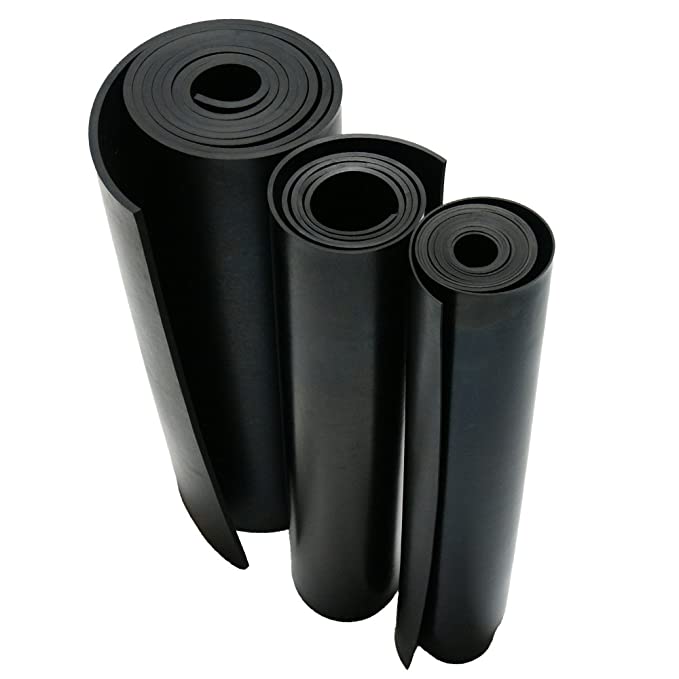
Wayne Rubber produces custom rubber sheet in any elastomer family, any durometer, and any thickness through molded panels and calendered strip formats from Wixom, Michigan. Sheet is available cured for immediate use or unvulcanized for customer processing.
When Catalog Sheet Works and When You Need Custom
Most rubber sheet applications are well served by catalog distributors. Wayne Rubber’s custom sheet capability is specifically for the situations where catalog sheet falls short. Knowing which situation applies avoids unnecessary tooling cost and lead time.
Custom Rubber Sheet Formats from Wayne Rubber
Cured rubber sheet produced in flat compression mold tooling, delivering precise thickness tolerance and consistent compound properties across the panel. Advantages: tightest thickness tolerance (typically ±0.005″ to ±0.010″ depending on compound and thickness); both faces are defined by the mold surface, producing a smooth, consistent finish; available in any compound that can be compression molded; panel sizes from small test panels up to approximately 12″ x 24″ in standard tooling, with larger panels available in multi-shot configurations. Best for: high-value compounds (FKM, FFKM, FVMQ, silicone) where consistent property certification across the batch is required; regulatory-grade compounds where panel-by-panel batch traceability is specified; applications requiring tighter-than-standard thickness tolerance for precision gasket cutting.
Rubber compound calendered to thickness between steel rolls and cut to width in continuous strip or roll form. Advantages: cost-effective for high-volume and large-format requirements; available in widths up to the calendar roll width; continuous length allows roll-form delivery for customers who cut to length in their own fabrication process; available in cured (vulcanized) or unvulcanized form. Cured calendered strip is ready for die-cutting, waterjet cutting, or hand-cutting into gaskets, washers, and flat seals. Unvulcanized calendered strip is delivered as feedstock for customers who vulcanize the sheet in their own press during bonding or co-cure operations. Best for: large-volume gasket blanking programs; liner materials for tanks, troughs, and equipment beds; sealing strip stock for field-cut applications.
Rubber compound calendered with an embedded fabric reinforcement layer (cotton, polyester, nylon, or fiberglass depending on application) to add dimensional stability, increase pressure rating, and prevent extrusion under high compressive bolt loads in flanged gasket applications. Advantages: fabric insertion prevents the sheet from thinning and extruding out of the flange when high bolt loads are applied; the reinforcement makes the gasket easier to handle and cut without tearing; available in rubber-one-side (ROS) and rubber-both-sides (RBS) configurations. Best for: high-bolt-load flange gaskets on pipe systems, pressure vessels, and equipment where unreinforced rubber would extrude; liner materials requiring dimensional stability under load; sealing strip that must be cut in the field without tearing or stretching out of dimension.
Custom Sheet Rubber Compound Selection
The same compound selection logic that applies to molded rubber parts applies to sheet rubber: the compound must be chemically compatible with the fluid contact, must maintain its properties over the service temperature range, and must be specified with durometer appropriate for the sealing load or wear contact requirement. Sheet rubber applications add one consideration that molded part applications do not: the sheet must be processable into the final shape by whatever cutting method the customer will use: hand cutting, die cutting, waterjet, laser, or knife cutting. Hard compounds (above 70 Shore A) are more difficult to die-cut cleanly. Highly filled compounds can have directional properties from the calendering process that affect die-cut tolerance. Fabric-reinforced sheet limits the edge quality achievable with hand cutting compared to waterjet or die cutting.
Wayne Rubber stocks uncompounded elastomer base and produces custom compound batches to specification. The minimum batch size for custom compound sheet production is typically smaller than many customers expect; a program requiring 50 pounds of sheet in a specialty compound is a viable custom order, not a minimum that requires committing to thousands of pounds of stock. Contact Wayne Rubber’s engineering team with the compound specification (or the application description, and let the team recommend the compound) and the sheet dimensions needed to get a batch quote.
Peroxide-cured vs. sulfur-cured grades are a specification choice that matters most for EPDM sheet. Standard distribution EPDM sheet is typically sulfur-cured; lower cost, adequate for most general applications, but with higher compression set than peroxide-cured grades and lower resistance to hot water and steam. Peroxide-cured EPDM sheet has significantly better compression set resistance (critical for gasket applications where the sheet must maintain sealing force over years), better resistance to steam and hot water above 250°F, and cleaner extractable profile for FDA and water contact applications. Wayne Rubber produces peroxide-cured EPDM sheet to order for applications where the distribution-grade sulfur-cured material is not adequate.
Cloth-inserted vs. unreinforced is the other key decision for gasket sheet applications. Unreinforced sheet is correct for soft-face flange gaskets at low to moderate bolt loads, for die-cut sealing washers, and for any application where the sheet will be compressed uniformly. Fabric-reinforced sheet is required when the bolt load is high enough to extrude unreinforced rubber from the joint, when dimensional stability during cutting is needed, or when the gasket must handle pressure without creeping out of the joint over time.
Custom Sheet Compounds Available from Wayne Rubber
| Compound | Sheet Applications | Standard Durometer Range | When Catalog Sheet Fails |
|---|---|---|---|
| EPDM (Peroxide-Cured) | High-temperature steam gaskets; potable water system flange gaskets requiring NSF-61 or FDA compliance; boiler inspection port gaskets; outdoor weatherstrip sheet for field cutting; compressed air system gaskets where ozone resistance and low compression set are required | 40-70 Shore A | Distribution EPDM is typically sulfur-cured. Peroxide-cured grades with better compression set resistance, steam resistance, and FDA compliance are not stocked by most distributors. Specify Wayne Rubber when the compound certification or cure system matters. |
| NBR (Nitrile) | Petroleum oil and hydraulic fluid flange gaskets; fuel-contact sealing sheet for tank manway and handhole gaskets; machine oil-contact liner sheet; die-cut gasket blanks for hydraulic equipment | 40-70 Shore A | Standard nitrile sheet is widely stocked. Wayne Rubber custom sheet is needed when a non-catalog durometer (35A or 75A), non-standard thickness, MIL-R-6855 certified grade, or unvulcanized strip feedstock is required. |
| Silicone (VMQ) | Medical device gasket blanks requiring USP Class VI or FDA certification; high-temperature oven door sealing strip; food processing equipment gasket sheet; electrical insulation sheet for transformer and switchgear; laboratory instrument sealing pads | 30-70 Shore A | Catalog silicone sheet exists but is generally peroxide-cured commercial grade. Platinum-cured silicone sheet for USP Class VI medical programs, specific durometers for seal compression calculations, and MIL-SPEC-certified grades require custom production. |
| FKM | Chemical process plant flange gaskets where EPDM and nitrile fail from fluid attack; fuel system gasket sheet for aviation or high-performance automotive programs; high-temperature chemical reactor inspection port gaskets; aggressive solvent-contact equipment lining sheet | 60-80 Shore A | FKM sheet is available from specialty distributors but at high cost per sheet and without compound certification. Wayne Rubber produces FKM sheet to customer compound specification with complete material traceability for programs where documentation is required. |
| Neoprene | General industrial gasket sheet where moderate oil and weather resistance is needed; dock bumper strip; weatherstrip sheet for field-cutting; electrical cable splicing insulation sheet; refrigeration equipment gasket blanks | 40-70 Shore A | Neoprene sheet is widely stocked. Wayne Rubber custom sheet is needed for MIL-SPEC grades (Mil-R-6855 Class 2 certified neoprene), non-catalog durometers, fabric-reinforced grades not carried by distributors, or large-panel format requirements. |
| Natural Rubber | Tank and vessel lining sheet for acid service; conveyor and chute wear lining in mining and aggregate; high-abrasion industrial liner applications; vibration damping pads cut from sheet; chemical-resistant tank lining for dilute acid and alkali | 30-65 Shore A | Natural rubber (gum) sheet is widely stocked in commercial grade. Wayne Rubber produces custom natural rubber sheet with specific abrasion-resistant formulations, acid-service lining grades, and non-standard thicknesses up to 1″ for heavy-duty lining applications not available in catalog form. |
| HNBR | High-temperature oil and gas gasket sheet for refinery flanges and equipment connections above NBR’s 250°F limit; ozone-resistant oil-service gasket sheet for outdoor industrial equipment; H2S-resistant flange gasket blanks for upstream oil and gas applications | 60-80 Shore A | HNBR sheet is essentially unavailable from standard distributors. All HNBR sheet supply is custom production. Wayne Rubber produces HNBR sheet to order with compound certification for oil and gas, automotive, and industrial programs requiring H2S resistance alongside hot oil service. |
Custom Rubber Sheet Applications
- Custom compound flange gaskets for piping systems with regulatory requirements
- Manway and handhole gasket blanks for storage tanks in chemical service
- High-temperature steam flange gaskets in peroxide-cured EPDM or silicone
- Hydraulic equipment inspection cover gaskets in certified NBR or FKM
- Food processing equipment gasket sheet in FDA-grade EPDM or silicone
- MIL-SPEC gasket sheet with material certification for defense programs
- Tank and vessel lining in natural rubber for dilute acid service
- Conveyor chute lining in high-abrasion natural rubber or polyurethane
- Mining equipment liner sheet in thick natural rubber or HNBR compounds
- Chemical plant floor and trench lining in acid-resistant EPDM
- Pump and valve body lining sheet bonded during equipment fabrication
- Wear pad sheet for machinery slideways and guide surfaces
- Custom-compound weatherstrip sheet for field-cutting to length
- Building expansion joint filler strip in neoprene or EPDM
- Door and panel sealing strip in UV-resistant EPDM compound
- Equipment access panel perimeter sealing strip in silicone
- Marine hatch and port sealing strip in saltwater-resistant compounds
- HVAC duct sealing strip in EPDM with field-cut capability
- Unvulcanized NBR or EPDM strip for rubber-to-metal bonding press operations
- Uncured compound sheet for co-cure operations with metal substrates
- Calendered compound strip for manual wrapping of irregular shapes
- Unvulcanized feedstock for customer molding press operations
- Pre-weighed compound preforms cut from sheet for compression molding charges
- Custom-compound strip for repair and splicing of in-service rubber linings
Also from Wayne Rubber
Request Custom Rubber Sheet from Wayne Rubber
Provide the compound (or describe the application environment and let the team recommend), durometer, thickness, panel or roll format, regulatory requirements if applicable, and quantity. Wayne Rubber will confirm the compound, format, and documentation package and provide a quote.