
Rubber Tensioner Components
A belt tensioner assembly is primarily a metal and spring mechanism, but the rubber elements inside it are frequently the first components to fail in service. The tensioner arm pivot bushing wears and allows arm slop that causes inconsistent belt tension. The damper element hardens from oil and heat contact and loses the viscous damping that prevents arm oscillation. The mounting isolator cracks from UV and ozone, transmitting vibration from the tensioner into the chassis structure. These rubber components are OEM-designed, application-specific parts that cannot be sourced from a catalog; they must be molded to the tensioner assembly’s geometry and to a compound specification that matches the drive system environment.
Wayne Rubber manufactures custom molded rubber tensioner components for agricultural equipment, industrial drive systems, automotive powertrain, and conveyor system OEMs in Wixom, Michigan. Pivot bushings, damper elements, mounting isolators, and idler arm stops in natural rubber, EPDM, NBR, neoprene, and HNBR to customer drawing.
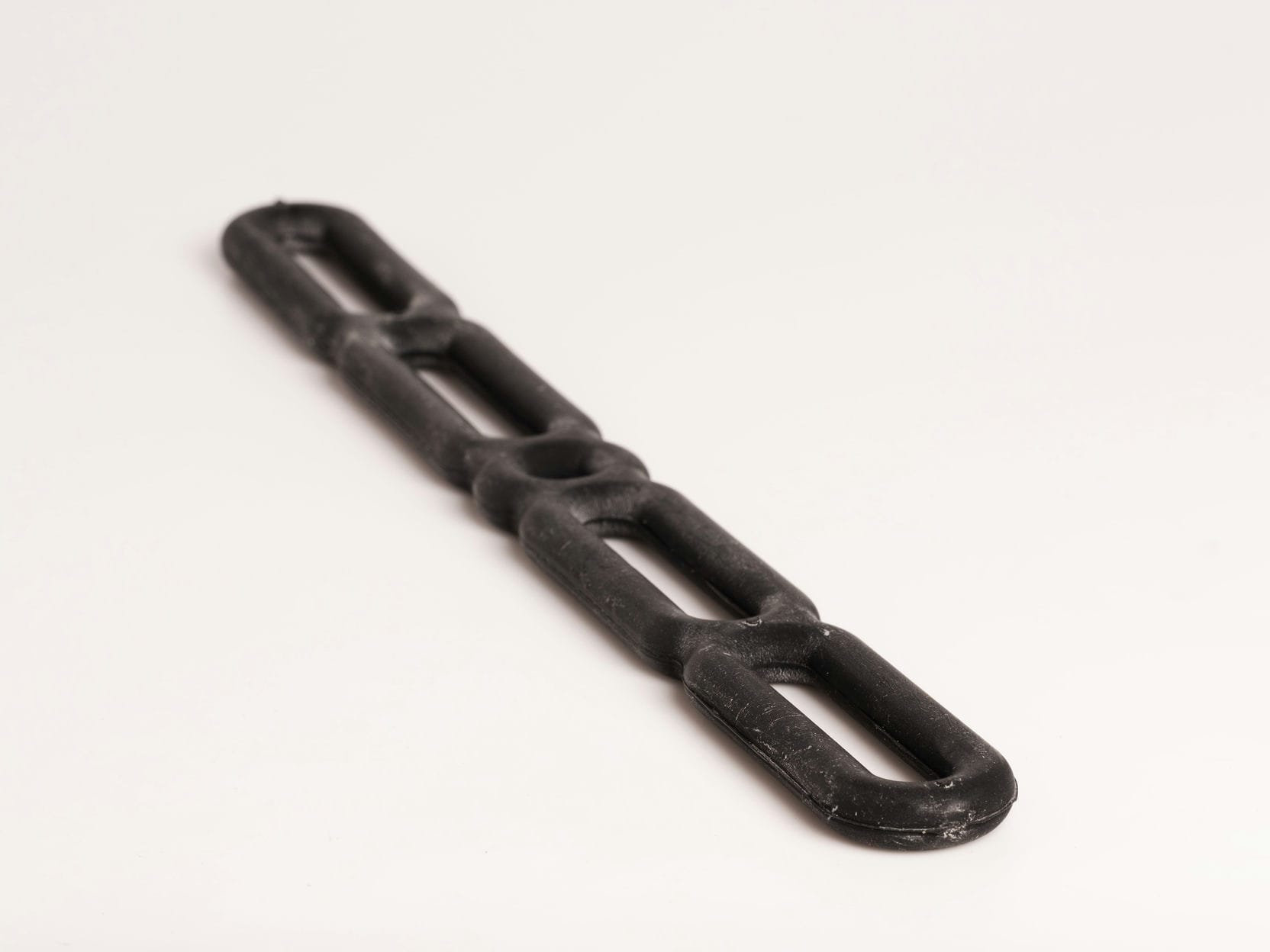
Four Rubber Elements in Belt Tensioner Assemblies
A complete belt tensioner assembly integrates metal stampings, springs, and bearings with several distinct rubber components that perform different functions. Each rubber element has a specific engineering requirement that determines its compound, durometer, and geometry. All four can be molded by Wayne Rubber to customer drawings.
A cylindrical rubber bushing pressed into the tensioner arm bore through which the pivot pin passes, isolating the arm from the mounting bracket and providing controlled compliance in the pivot axis. Function: the bushing allows the arm to pivot smoothly under spring load while preventing metal-to-metal contact between the arm bore and pivot pin, which would cause fretting wear and eventual looseness in the pivot joint. Critical properties: the bushing must maintain its interference fit in the arm bore under thermal cycling (the arm expands and contracts around the bushing as temperature varies); it must resist the specific lubricant or fluid in the drive housing environment; and it must not cold-flow under the sustained radial load of the spring force on the pivot. Common failure mode: compound degradation from oil contamination causes the bushing to swell and seize the pivot pin, or to lose the interference fit and allow pivot slop. HNBR is the correct compound for oil-adjacent pivot bushings on high-output agricultural and automotive engines where temperatures exceed NBR’s service limit.
A rubber element positioned to act as a viscous or hysteretic damper against the oscillating motion of the tensioner arm under dynamic belt load fluctuations. In spring-loaded automatic tensioners, the damper element provides one-way or asymmetric resistance to arm movement, allowing the arm to move slowly in one direction (accommodating belt stretch) while resisting rapid oscillation (preventing arm flutter under pulley load pulses). Function: without a functional damper element, a spring-loaded tensioner arm oscillates sympathetically with engine or drive system load pulses, transmitting variable tension back into the belt and dramatically reducing belt service life through fatigue. Critical properties: the damper compound must maintain consistent hysteresis over a wide temperature range; it must resist the oil splash and thermal environment of the drive location; and its geometry must provide the specific damping force asymmetry the tensioner design requires. Neoprene and NBR compounds with controlled Shore A and geometry are most common.
A rubber gasket, grommet, or molded isolator element at the interface between the tensioner bracket and the engine block, chassis, or equipment frame, providing vibration isolation and sealing around the mounting fasteners. Function: the tensioner mounting isolator prevents the tensioner assembly’s internal spring and arm vibration from being transmitted as structure-borne noise into the engine or chassis. It also seals around the mounting bolts against oil splash, water, and contamination. Critical properties: the isolator must maintain its compliance under sustained compressive bolt load without cold-flowing or losing its sealing function; it must resist the specific fluid and temperature environment at the mounting face; and it must accommodate slight misalignment between the tensioner bracket and the mounting surface without cracking under long-term service. EPDM is correct for outdoor and water-adjacent mounting locations; NBR or neoprene for oil-adjacent mounting on engine assemblies.
A molded rubber stop that limits the travel range of the tensioner arm at both ends of its designed pivot range, preventing metal-to-metal contact at the arm’s design limits and absorbing the kinetic energy of the arm at travel extremes. Function: when a belt breaks or the tensioner encounters a high shock load, the arm moves rapidly to its travel limit. Without a rubber stop, metal-to-metal impact at the travel limit damages the arm, bracket, and pivot hardware. The rubber stop absorbs this impact and protects the metal components. Critical properties: the stop must be stiff enough to arrest the arm at the travel limit without allowing excessive overtravel, but compliant enough to absorb the impact without transmitting full shock force to the bracket. Natural rubber with 60-70 Shore A provides the correct impact absorption and stiffness combination for most tensioner travel stop applications. Neoprene where oil splash exposure at the stop location is anticipated.
Tensioner Rubber Requirements by Drive System Type
Agricultural equipment drive systems present the most demanding rubber tensioner environment in any off-highway application. Combine harvester accessory drives run at sustained high load during harvest operations, with engine bay temperatures elevated by long duty cycles in hot field conditions. The drive housing is exposed to field dust, crop debris, and weather without the protection of an enclosed engine compartment. UV and ozone degrade unprotected elastomers rapidly on equipment that sits outdoors between seasons. Agricultural tensioner rubber components must simultaneously resist oil splash from the engine accessory drive, UV and ozone from outdoor exposure, and the wide temperature swing between cold morning start-up and sustained peak-load afternoon harvest operation.
The compound specification for agricultural tensioner pivot bushings and damper elements is more demanding than for automotive applications because of this UV and ozone exposure alongside oil contact. Standard NBR covers the oil resistance requirement but fails rapidly in outdoor UV exposure. HNBR provides the hot oil resistance and adds ozone resistance, making it the correct compound for agricultural tensioner components where both failure modes are present simultaneously. Wayne Rubber manufactures HNBR pivot bushings and damper elements to customer agricultural tensioner drawings.
Industrial conveyor and processing equipment drive systems require tensioner rubber components that can withstand sustained continuous duty that automotive and agricultural drives do not. A conveyor tensioner may run 24 hours a day, 365 days a year, at a constant load with no shutdown cycles to allow thermal recovery. The absence of thermal cycling means that cold-flow of the pivot bushing under constant compressive load is a more significant failure mode than in automotive applications where the engine cycles on and off. Industrial tensioner bushings must be specified at higher durometer (60-70 Shore A versus 50-60 Shore A in automotive) to resist cold-flow under sustained load without sacrificing the isolation function.
Automotive and powertrain drive systems require the tightest dimensional tolerances of any tensioner rubber application. Automotive engine front-end accessory drives (FEAD) operate at precisely defined space and load envelopes, and the tensioner rubber elements must be held to tolerances that OEM quality systems can verify at receiving inspection. Wayne Rubber produces automotive tensioner rubber components to IATF-caliber dimensional specifications with First Article Inspection documentation when customer programs require it.
Tensioner Rubber Component Applications
- Combine harvester accessory drive tensioner bushings
- Tractor front-end drive tensioner pivot bushings
- Harvester header drive tensioner arm stops
- Baler and forage harvester drive tensioner damper elements
- Planter and seeder drive system tensioner isolators
- Grain cart and auger drive tensioner mounting seals
- Engine FEAD serpentine belt tensioner pivot bushings
- Automatic tensioner arm damper elements
- Timing belt tensioner mounting isolators
- Accessory drive tensioner travel stop bumpers
- Hybrid drive system belt tensioner components
- Electric power steering belt tensioner rubber elements
- Conveyor belt takeup tensioner pivot bushings
- Horizontal gravity takeup tensioner mounting isolators
- V-belt drive system tensioner arm bushings
- Chain drive tensioner pad elements in slide-contact designs
- Screw conveyor and auger drive tensioner components
- Mining and aggregate conveyor system tensioner elements
- Excavator and dozer engine accessory drive tensioners
- Hydraulic pump drive belt tensioner bushings
- Track tensioner rubber buffer elements on crawler equipment
- Generator set accessory drive tensioner components
- Crane and lift equipment auxiliary drive tensioner isolators
- Concrete mixer and pump drive tensioner rubber elements
- Marine engine accessory belt tensioner bushings
- Outboard and inboard drive system tensioner components
- Off-road vehicle engine drive tensioner elements
- Utility vehicle and ATV drive tensioner rubber parts
- Recreational marine accessory drive system components
- Military vehicle engine drive tensioner elements
- Rooftop unit and packaged HVAC belt drive tensioner bushings
- Chiller and compressor belt drive tensioner isolators
- Fan and blower drive system tensioner arm components
- Air handling unit belt drive tensioner mounting elements
- Industrial fan drive tensioner pivot and stop components
- Refrigeration compressor drive tensioner rubber elements
Compound Selection for Tensioner Rubber Components
| Compound | Tensioner Component | Key Properties | Avoid When |
|---|---|---|---|
| Natural Rubber | Travel stop and overload bumper elements; tensioner mounting isolators in clean indoor environments; high-resilience damper elements requiring rapid rebound between load pulses | Highest resilience for efficient energy return in dynamic damper applications; best tear resistance at geometry stress concentrations in bumper elements; highest dynamic damping performance per unit mass for arm stop applications | Any oil or fuel contact; outdoor UV and ozone exposure on agricultural and construction equipment; sustained compression under hot oil temperatures above 200°F |
| NBR | Engine accessory drive tensioner pivot bushings in oil-adjacent locations below 250°F; automotive FEAD tensioner damper elements in petroleum oil environments; indoor industrial conveyor drive tensioner components without UV exposure | Standard petroleum oil resistance for engine bay tensioner components; good compression set resistance for pivot bushings under sustained spring load; cost-effective for high-volume automotive tensioner programs | Outdoor UV and ozone without protection; agricultural equipment where ozone resistance alongside oil resistance is required (HNBR is correct); hot oil above 250°F (HNBR required) |
| HNBR | Agricultural equipment tensioner pivot bushings and damper elements requiring both hot oil resistance and ozone resistance; high-output engine tensioner bushings where oil temperatures exceed NBR’s 250°F limit; construction equipment tensioner components in outdoor environments with oil exposure | Hot oil resistance to 300°F combined with ozone resistance, the correct compound when both failure modes are present simultaneously; better compression set resistance than NBR at elevated temperatures; extended service life in applications that exhaust NBR pivot bushings through hot-oil hardening | Cost-sensitive applications where NBR’s temperature limit is not exceeded and UV exposure is not present; applications where the full HNBR performance specification is not required to justify the cost premium over NBR |
| Neoprene | Outdoor tensioner mounting isolators on exposed equipment where moderate oil splash is possible; agricultural equipment tensioner arm stops in outdoor locations with UV and occasional oil contact; industrial tensioner mounting gaskets and isolators in mixed-environment facilities | Balanced oil, UV, and ozone resistance for tensioner components in environments that cannot be precisely characterized; moderate cost for general-purpose outdoor tensioner rubber elements where HNBR performance is not required | Sustained hot oil above 250°F (HNBR required); applications requiring highest-resilience damping (natural rubber preferred); precision automotive applications where tighter durometer and property control is required |
| EPDM | Tensioner mounting isolators on outdoor equipment in water and weather exposure without oil contact; HVAC equipment belt drive tensioner mounting isolators; marine engine tensioner components in salt spray environments where oil contact is not present | Best UV, ozone, and weather resistance for tensioner mounting isolators in outdoor and marine applications; water and steam resistance for HVAC and marine drive tensioner mounts; long outdoor service life for rooftop and exposed mounting locations | Any petroleum oil or fuel contact; pivot bushing applications where oil contamination is possible; applications requiring highest resilience for dynamic damping |
| AEM | Underhood automotive tensioner components on engines running biodiesel blends; agricultural equipment tensioner bushings on modern high-output engines with ozone exposure alongside fuel system proximity; next-generation engine tensioner compounds replacing NBR in demanding underhood environments | Biodiesel resistance alongside ozone resistance and broad temperature range; the correct upgrade from NBR for tensioner components on equipment running biodiesel fuels where UV and ozone resistance is also required; better aging resistance than NBR in modern hot underhood environments | Concentrated aromatic solvent environments; applications where FKM’s broad chemical resistance is required; very high-temperature engine locations above AEM’s 375°F service limit |
Related Rubber Drive System Components from Wayne Rubber
Request Tensioner Rubber Components from Wayne Rubber
Provide the component drawing or failed sample, the drive system type (agricultural, automotive, industrial, or marine), the fluid and temperature environment at the component location, and the quantity. Wayne Rubber will specify the correct compound and provide a quote with tooling and piece cost.