
Neoprene Gaskets
Neoprene (chloroprene rubber, CR) occupies a unique position in the gasket material spectrum: it provides moderate oil resistance alongside strong ozone, UV, and weather resistance that NBR cannot match, making it the balanced choice when the application environment cannot be characterized as exclusively oil-service or exclusively outdoor. HVAC equipment, marine hardware, refrigeration systems, outdoor electrical enclosures, and automotive weatherstripping all rely on neoprene because it handles the combination of moderate fluid exposure and environmental attack that defeats single-property elastomers.
Neoprene’s chlorine content also gives it a property that NBR and EPDM lack entirely: inherent flame resistance. CR gaskets are self-extinguishing when ignition is removed, making neoprene the standard specification for gaskets in applications subject to fire safety codes, electrical equipment requiring UL 94 compliance, and marine environments governed by ABYC or Coast Guard flammability standards.
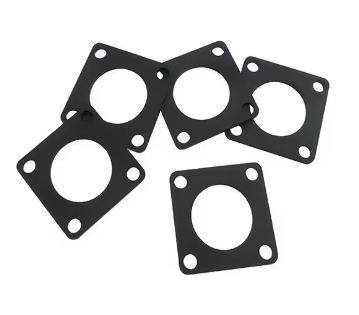
Wayne Rubber manufactures custom neoprene gaskets in Wixom, Michigan by compression molding, transfer molding, and die-cutting from sheet. Commercial-grade CR/SBR blend and premium 100% chloroprene available, across the full durometer range, with specialty grades for diaphragm service, cloth-inserted reinforced profiles, and flame-retardant applications.
Why Neoprene is the Balanced-Environment Gasket Specification
Neoprene’s distinguishing characteristic as a gasket material is its resistance profile across multiple simultaneous degradation mechanisms. NBR provides better oil resistance but degrades within months in direct sunlight due to its unsaturated backbone. EPDM handles outdoor weathering and ozone excellently but swells immediately in petroleum fluids. Neoprene sits between them: its oil resistance is adequate for moderate petroleum contact (not prolonged immersion in aggressive oils, but contact with oil-wetted surfaces, oil mist, and dilute oil-water emulsions), while its chlorine-modified backbone provides ozone, UV, and weather resistance that NBR cannot approach.
This balanced profile makes neoprene the standard specification for HVAC equipment gaskets, where the gasket may simultaneously contact refrigerant oil, face outdoor UV exposure on a rooftop unit, and experience thermal cycling from -20°F to +180°F across seasons. It is also the standard for marine hardware gaskets, where saltwater, sunlight, petroleum fuel splash, and bilge oil contact occur in the same installation.
Neoprene’s flame resistance is a specification-driving property that most gasket literature treats as a footnote. The chlorine in CR’s polymer backbone interferes with combustion chain reactions, making the cured compound self-extinguishing when the ignition source is removed. This is not a treated flame retardant that can degrade or leach — it is intrinsic to the polymer chemistry. For gaskets in electrical enclosures, marine applications governed by ABYC standards, transit vehicle seating and interior components, and equipment covered by UL 94 V-2 or V-0 flammability requirements, neoprene’s inherent flame resistance is frequently the reason it is specified over both NBR and EPDM.
Neoprene also performs well with many commercial refrigerants including R-22, R-134a, and ammonia (R-717), making it the standard gasket specification for refrigeration system flanges, sight glass gaskets, and inspection cover gaskets in both commercial refrigeration and marine refrigeration equipment. Confirm compatibility with your specific refrigerant using the Chemical Resistance Guide before specifying for newer HFO refrigerant blends.
Neoprene Gasket Grades: Commercial Blend vs. Premium 100% CR
The grade distinction in neoprene gaskets is as consequential as it is in nitrile, and equally underexplained in most gasket supplier literature. The majority of neoprene sheet stock in the gasket fabrication supply chain is a CR/SBR (chloroprene/styrene-butadiene rubber) blend, not 100% chloroprene. Understanding which grade your application actually requires prevents over-specification on cost and under-specification on performance.
The standard catalog product from most gasket distributors and fabricators. A blend of chloroprene rubber and styrene-butadiene rubber in proportions that vary by supplier, typically in the range of 60-80% CR. Provides general-purpose weathering and moderate oil resistance adequate for most HVAC, enclosure, and industrial panel gasket applications. 60 Shore A standard; 40-80 Shore A available. Temperature range -20°F to +180°F. Best for: HVAC duct and unit cover gaskets, outdoor electrical enclosure door gaskets, general industrial equipment panel gaskets, and any application where the environment is outdoor but fluid contact is incidental. The SBR content reduces ozone resistance and oil resistance compared to premium 100% CR but delivers acceptable service life in most standard environmental sealing applications at lower material cost.
100% CR with no SBR blending, providing full chloroprene performance per ASTM D2000 compound designations. Superior ozone resistance, oil resistance, and physical properties including higher tensile strength, better elongation, and more consistent compression set than commercial blend. 40-90 Shore A. Temperature range -40°F to +250°F. Best for: marine hardware gaskets with sustained saltwater and fuel exposure, refrigeration system flange and inspection gaskets, automotive weatherstrip and underhood gaskets where ASTM D2000 compliance is specified, and any application where the material certificate must confirm compound designation rather than generic “neoprene” description. Required when the purchase order specifies CR by ASTM D2000 designation (e.g., BC, BE, BF grade callouts).
Neoprene sheet reinforced with one or two plies of woven nylon or polyester fabric bonded into the elastomer during manufacturing. The fabric reinforcement prevents gasket creep and extrusion under sustained bolt load, maintains dimensional stability at elevated temperatures, and allows the gasket to be cut thinner than unreinforced sheet without tearing during installation. Best for: pipe flange gaskets operating under elevated pressure and temperature where unreinforced sheet would cold-flow and lose seating stress over time, large-format industrial flange gaskets where dimensional stability across the full face is required, and automotive and heavy equipment applications where the gasket must resist bolt-load creep. Available in 1-ply and 2-ply nylon reinforcement configurations.
Polyester-reinforced neoprene specifically formulated and constructed for diaphragm applications involving repeated flexing under pressure. Higher tensile strength and tear resistance than standard gasket sheet; the polyester reinforcement distributes mechanical stress across the diaphragm face to prevent fatigue cracking at flex points. Best for: pump and valve diaphragms in moderate oil and chemical service, actuator diaphragms in HVAC and industrial controls, and pressure vessel diaphragms where the combination of flexing duty and oil-adjacent environment makes NBR or EPDM inadequate alone. Wayne Rubber also manufactures molded neoprene diaphragms for applications requiring custom geometry, contoured profiles, or integrated bead features that flat diaphragm sheet cannot provide.
Neoprene Gasket Applications by Industry
- Rooftop unit and AHU access door and cover gaskets
- Refrigeration compressor housing flange gaskets
- Condenser and evaporator inspection cover gaskets
- Refrigerant line sight glass and service port gaskets
- Chiller unit access cover and panel gaskets
- Walk-in cooler and freezer door seal backup gaskets
- Hatch cover and deck access gaskets in saltwater exposure
- Fuel tank inspection cover and filler neck gaskets
- Engine compartment access and cover gaskets
- Marine electrical enclosure and junction box gaskets
- Bilge pump and through-hull fitting cover gaskets
- Radar and navigation electronics enclosure gaskets
- Outdoor electrical panel and switchgear door gaskets
- UL 94-rated enclosure gaskets requiring flame resistance
- Transit and rail vehicle interior component gaskets
- Generator housing and cover gaskets in outdoor service
- Utility meter housing and cover gaskets
- Telecommunications equipment enclosure door gaskets
- Body weatherstrip and door seal backup gaskets
- Trunk and hood access gaskets with outdoor UV exposure
- Air conditioning system cover and housing gaskets
- Underhood gaskets in non-direct-oil-contact locations
- Fuel filler neck and vapor recovery system gaskets
- Battery tray and enclosure cover gaskets in EVs
- Outdoor industrial machinery panel and cover gaskets
- Oil-mist-adjacent equipment enclosure gaskets
- Industrial pump and compressor cover gaskets in weather
- Mining and aggregate equipment housing gaskets
- Agricultural equipment cover gaskets with UV exposure
- Construction equipment access panel gaskets
- Window and curtain wall perimeter gaskets
- Expansion joint cover and face gaskets
- Roofing equipment penetration and flashing gaskets
- HVAC roof curb and equipment base gaskets
- Electrical conduit penetration seal gaskets
- Mechanical room equipment isolation gaskets
Neoprene vs. Other Gasket Materials
| Condition | Specify | Reason |
|---|---|---|
| Outdoor environment with moderate oil or fuel splash contact | Neoprene CR | Neoprene handles the combination of UV, ozone, and moderate petroleum contact that neither NBR (fails outdoors) nor EPDM (swells in oil) can manage alone. The balanced-environment specification. |
| Flame resistance required (UL 94, ABYC, fire codes) | Neoprene CR | Neoprene’s chlorine content provides inherent self-extinguishing behavior without added flame retardant. NBR and EPDM do not have this property. For gaskets in applications governed by electrical safety or marine flammability codes, neoprene is the standard rubber gasket specification. |
| Prolonged immersion in petroleum oil or hydraulic fluid | NBR | Neoprene’s oil resistance is adequate for moderate contact and splash, not sustained immersion. For hydraulic systems, fuel-wetted flanges, or any application where the gasket is continuously surrounded by petroleum fluid, NBR premium grade provides superior resistance. |
| Water, steam, or outdoor service without oil contact | EPDM | EPDM outperforms neoprene in water, steam, and pure outdoor weathering applications where no oil contact is present. Lower cost than neoprene and superior water resistance makes it the preferred choice when the oil-tolerance property of neoprene is not needed. |
| High temperature above 250°F or aggressive chemical exposure | FKM | Neoprene’s upper service limit is approximately 250°F in continuous service. For higher temperatures or contact with concentrated solvents, acids, or aromatic hydrocarbons, FKM fluoroelastomer is the required specification. |
| High-temperature food or pharmaceutical contact | Silicone | FDA-grade neoprene is available and meets CFR 177.2600 in white/off-white formulations, but silicone’s wider temperature range and lower extractables make it the preferred specification for food processing applications where thermal cycling or high-temperature cleaning is involved. |
Also from Wayne Rubber
Request Custom Neoprene Gaskets from Wayne Rubber
Provide the gasket profile (drawing, sample, or dimensions), the fluid and environmental exposure (oil type, refrigerant, outdoor UV, saltwater), whether flame resistance certification is required, and the grade needed (commercial blend or premium 100% CR). Wayne Rubber will confirm the compound, recommend the manufacturing method, and quote tooling and piece cost.