
Blog
Rubber Seals for Industrial Robots and Cobots
Jun
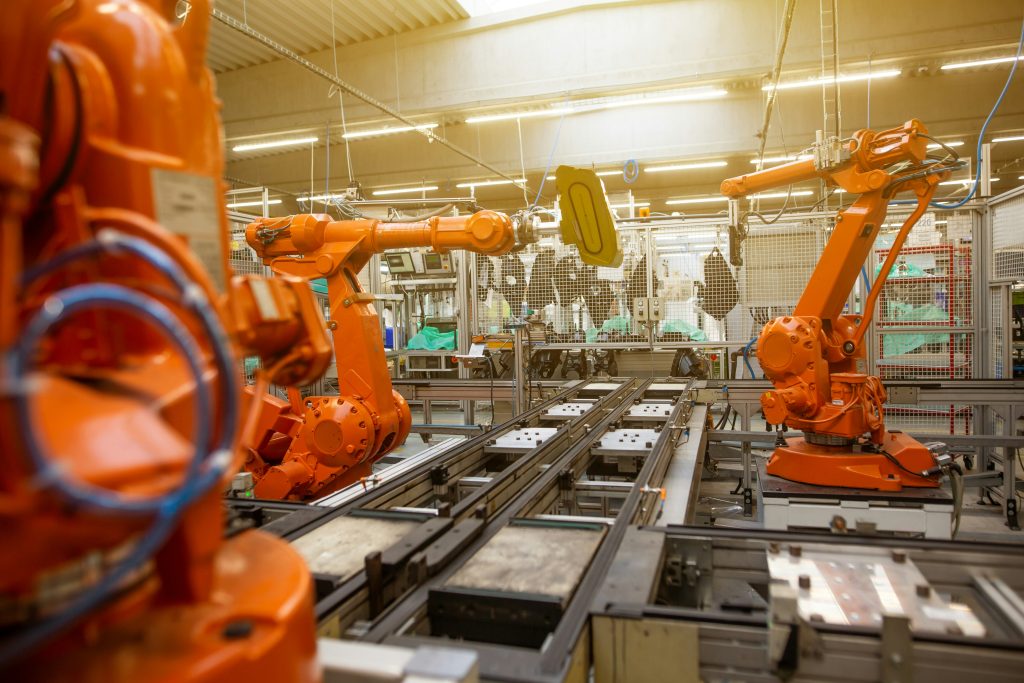
Industrial robots and collaborative robots (cobots) operate in some of the most demanding sealing environments in modern manufacturing. A six-axis welding robot in an automotive body shop cycles through hundreds of thousands of joint articulations per year while exposed to welding spatter, cutting fluid mist, and the heat from nearby weld zones. A food-grade delta robot on a confectionery line must comply with FDA food-contact requirements on every rubber component that could reach the product stream, survive aggressive caustic CIP washing between production runs, and do all of this in a 3-3.5g acceleration field at 150 picks per minute. A cleanroom cobot in a pharmaceutical filling line must seal its joint housings without any extractable siloxane compound that could contaminate sterile product. The correct elastomer specification for each of these is different, and none of them is the generic “EPDM or NBR” material list that most robotics sealing content provides.
Why Robot and Cobot Sealing Demands Application-Specific Compound Selection
Industrial robot sealing was historically a secondary engineering concern. Most industrial robots operated in controlled factory environments where the primary requirement was keeping joint lubricant in and excluding metal chips and coolant mist from joint housings. Standard NBR and nitrile-family compounds covered most applications, and the relatively short service life expectations of early industrial robots (5-7 years before major overhaul) meant that seal longevity was not a first-order design variable.
Three developments have changed this calculus fundamentally. Collaborative robots now operate in food production, pharmaceutical manufacturing, and semiconductor assembly where the sealing compound must comply with regulatory requirements that standard industrial NBR does not meet. Robot deployment environments have expanded from controlled factory floors to outdoor logistics operations, washdown food processing environments, chemical processing plants, and medical facilities, each with distinct compound requirements. And robot design life expectations have extended to 10-15 years in production environments where the cost of taking a robot offline for seal service is significant enough to make long-term seal life a first-order engineering parameter.
The cobot market adds a further complexity: cobots operate in close proximity to human workers, which imposes requirements on seal compounds that industrial cage-robots do not face. A cobot that applies hydraulic force to a human worker during a contact event must not expose that worker to chemical hazards from seal compound extractables at the robot surface. In medical device assembly and pharmaceutical applications, this extends to full biocompatibility requirements on any rubber component that could contact product or be touched by operators without PPE.
The sealing engineering challenge is also complicated by the joint geometry of articulated robots. A six-axis robot arm contains multiple joints, each with small installation space for the seal, rotating at varying speeds and through varying angular ranges depending on the robot’s task. The seal must maintain consistent contact force and ingress protection across the full range of joint motion without adding friction that would degrade the robot’s positioning accuracy or increase motor load. This dynamic sealing requirement, combined with the specific lubricant used in harmonic drive and cycloidal gear reducers, creates compound selection constraints that no industrial sealing standard fully addresses.
Robot Types and Their Primary Sealing Environments
High cycle count, continuous motion. Exposed to welding spatter, cutting fluids, coolant mist, and metal chips. Joint seals see synthetic gear oil and harmonic drive grease. IP65-67 required in harsh environments.
High-speed pick-and-place at 100-200 cycles/minute. Food-grade delta robots require FDA-compliant compounds, CIP washdown resistance, and metal-detectable components in product-contact zones. SCARA robots need precision positioning with minimal seal friction.
Human-adjacent operation imposes biocompatibility and chemical safety requirements. Outdoor cobots face full environmental weathering. Cleanroom cobots require ultra-low outgassing and siloxane-free compounds. Wide operating environment diversity in a single platform family.
Wheel and drive motor seals in floor-contact contamination environments. Electronics enclosure gaskets must maintain IP rating through vibration cycling. Outdoor AMRs add UV, rain, and temperature cycling to the sealing requirement.
Emerging platform type with the most complex sealing environment: skin-like tactile surfaces (platinum silicone), joint seals that must flex through full human range of motion, and biocompatible compounds where patient or worker contact is possible.
Extreme environment: welding spatter at 1,500°C, continuous arc flash, cutting fluid mist, and smoke. Seals must resist thermal shock and chemical attack simultaneously. The most demanding standard industrial robot sealing environment.
Rubber Sealing Applications in Industrial Robots and Cobots
Robot joint housing seals perform two simultaneous functions: they retain the lubricant inside the joint reducer (harmonic drive, cycloidal, or planetary gear) and they exclude contaminants from the joint environment (coolant mist, metal chips, dust, liquid spray) from entering the reducer. These are dynamic rotary seals experiencing continuous motion at varying angular velocities through the robot’s operational range, typically at low-to-moderate surface speed at the seal lip.
The harmonic drive grease compatibility problem: The most widely used precision gear reducers in articulated robots and cobots are harmonic drives (also called strain wave gearing), made by Harmonic Drive Systems, Shimano, and others. Harmonic drives require a specific grease formulated for the flexspline-to-wave generator contact: typically a fluorinated grease (NLGI Grade 2 polytetrafluoroethylene-thickened synthetic base oil, such as Harmonic Drive’s own SK-2 or SK-3 greases) or a lithium complex synthetic base oil grease. The fluorinated PTFE-thickened greases used in harmonic drives are chemically aggressive to standard elastomers. Standard NBR and EPDM show significant volume swell in PTFE-thickened fluorinated grease, and their seal lip properties degrade with sustained contact. FKM provides the best resistance to fluorinated harmonic drive greases among common elastomers. Request harmonic drive grease compatibility data (ASTM D471 immersion in the specific grease formulation at 70-80°C) from the compound supplier before specifying any elastomeric joint seal for harmonic drive applications.
For cycloidal and planetary gear reducers that use synthetic PAO or ester-based gear oils, HNBR is the appropriate joint seal compound. HNBR’s combination of synthetic oil resistance and low friction under dynamic contact provides better seal life than standard NBR in high-cycle robotic joint applications. FKM has better chemical resistance to PAO oil than HNBR at equivalent temperature but its higher friction coefficient is a disadvantage for seal lip designs that must minimize drag torque in precision positioning robots where the additional friction would affect positioning accuracy.
Low-friction design is a unique constraint in robotics: Standard industrial shaft seals are designed for maximum sealing security with relatively high lip contact force. In a robot joint, excessive seal friction adds to the joint’s total torque resistance, which the motor must overcome in addition to the actual mechanical load. In high-precision cobots where positioning accuracy is specified in fractions of a millimeter, the repeatability of seal friction across operating temperature contributes to positioning error. Low-friction PTFE-lipped elastomeric seals with FKM backing bodies are used in precision robot joint designs specifically to balance sealing integrity against friction contribution.
Robot controllers, power electronics, servo drives, and sensor modules are housed in enclosures that must maintain their IP rating through the robot’s operating life, including the vibration, thermal cycling, and chemical exposure of the deployment environment. Controller enclosure gaskets are static seals compressed between the housing body and cover, exposed to the ambient environment of the robot installation.
For indoor industrial robots in standard factory environments, closed-cell silicone sponge gaskets are the standard specification. Silicone provides the temperature range (-75°C to +200°C) required for enclosure gaskets that experience thermal cycling from cold machine startup to operating temperature, and its low compression force allows IP-rated sealing on enclosures with limited fastener count or non-rigid plastic covers. The closed-cell structure of silicone sponge resists moisture ingress even under sustained water spray, making it appropriate for IP65 and IP67 enclosure ratings without the high bolt load that solid silicone requires.
For outdoor robots and AMRs exposed to UV radiation and atmospheric ozone, peroxide-cured EPDM provides better long-term ozone and UV resistance than standard silicone at lower cost. EPDM sponge is appropriate for outdoor AMR electronics enclosure gaskets where the temperature range does not exceed the EPDM service limit and oil contact is absent. For outdoor environments where both UV and oil or fuel contact exist simultaneously (outdoor logistics robots refueled near the vehicle), neoprene’s balanced oil and ozone resistance is the appropriate specification.
For robots deployed in chemical processing environments where the enclosure exterior is exposed to solvent vapors, acid mist, or other aggressive chemicals, fluorosilicone combines silicone’s temperature range with resistance to fuels and solvents that standard silicone lacks. Fluorosilicone enclosure gaskets are appropriate for process and inspection robots operating in chemical plant environments where standard silicone would swell and lose IP rating integrity.
Vacuum cup end effectors are among the most directly application-specific rubber components in industrial robotics. The cup compound determines what surfaces can be handled without damage, what chemicals the cup resists, what temperature range the cup operates in, and in regulated environments, what compliance certifications apply. A single robot platform may use different cup compounds depending on the product line it is serving.
Standard silicone for general product handling: Platinum-cured silicone is the default vacuum cup compound for general industrial pick-and-place where the primary requirements are wide temperature range, flexibility through many compression cycles, and low surface marking. Silicone’s soft compliance to the product surface and low residual mark tendency make it appropriate for smooth, finished product surfaces including glass, painted panels, electronics housings, and packaged goods. The limitation of silicone vacuum cups is the siloxane migration problem: silicone rubber progressively releases low-molecular-weight siloxane oligomers from its surface. On painted metal automotive components, siloxane contamination creates fish-eye defects in subsequent paint coats. In electronics assembly, siloxane deposits on PCB surfaces cause solder mask adhesion failures and connector pin corrosion. Silicone vacuum cups are not appropriate for automotive body panel handling prior to painting or for PCB handling in electronics assembly.
NBR for rough and oily surfaces: Standard and FDA-grade NBR vacuum cups are used for handling oily machined parts, metal stampings with coolant residue, and glass with release agent coating. NBR’s oil resistance prevents the cup from swelling and losing its vacuum seal integrity when contacted with petroleum coolant films. Standard silicone swells in petroleum oil and loses suction cup geometry on oily surfaces within a short operational period.
Polyurethane for abrasive surfaces: High-durometer polyurethane vacuum cups provide superior abrasion resistance for handling rough-textured surfaces such as raw castings, stone products, and abrasive packaging materials that wear silicone or NBR cups within weeks. The tradeoff is reduced flexibility over temperature range and the hydrolysis sensitivity of ester-based polyurethane in high-humidity washdown environments.
The electronics handling problem: For semiconductor wafer handling, PCB handling in surface mount assembly, and flat panel display handling, a specialized category of non-silicone, ultra-clean vacuum cups is required. These are typically made from engineered thermoplastic elastomers (TPE) or specially formulated EPDM compounds with confirmed ultra-low siloxane emission. The selection of vacuum cup compound for electronics handling is driven by contamination specifications that parallel semiconductor fab sealing requirements: siloxane-free, low particle generation, and validated clean. Wayne Rubber can discuss compound options for electronics handling vacuum cup applications on request.
Delta robots in food and confectionery packaging, collaborative robots in meat and poultry processing, and assembly cobots in pharmaceutical filling lines all operate under food-safety and pharmaceutical regulations that impose specific compound requirements on every rubber component that could contact the product stream or be reached by the product.
FDA compliance applies to more components than expected: In a food-production environment, FDA food-contact compliance applies to any rubber component where contact with the food product is reasonably possible, not just components in direct intentional contact. A cobot arm joint seal that is adjacent to an open conveyor line, a vacuum cup that contacts product surfaces, and a drive housing gasket on a robot suspended above the production line can all be subject to food-contact compliance requirements depending on the specific HACCP analysis for the installation. Establish the food-contact compliance boundary for the robot installation with the facility’s food safety team before finalizing rubber component specifications.
CIP resistance is the most demanding requirement: Food-grade robots and cobots in dairy, beverage, and meat processing facilities undergo washdown with caustic cleaners (2-3% NaOH at 140-180°F), acid rinses (1-2% nitric or phosphoric acid at 120-160°F), and sanitizers (peracetic acid, hypochlorite) between production runs. The rubber compounds on the robot must resist this cleaning chemistry on their external surfaces through the robot’s full operating life. As discussed in the food processing elastomer guide, the CIP chemical sequence, not just the process fluid, determines compound selection for food-grade rubber components. Peroxide-cured EPDM is the standard for aqueous food-contact sealing and handles caustic and moderate acid CIP chemistry. Platinum-cured silicone handles broader temperature range and provides better peracetic acid resistance for sanitizer-intensive operations.
Metal-detectable compounds for product-adjacent zones: Any rubber component in a food production environment where fragment contamination could enter the product stream without being captured by downstream controls should be specified in metal-detectable or X-ray detectable compound. Blue metal-detectable EPDM and blue metal-detectable silicone are available and should be specified for vacuum cup seals, product-contact gaskets, and any other rubber component in the product zone of a food-production robot installation. The metal-detectable specification should be driven by the HACCP analysis for the specific robot installation, not applied universally to all robot rubber components.
Collaborative robots deployed in semiconductor cleanrooms, pharmaceutical fill-finish facilities, and medical device assembly cleanrooms face the same siloxane contamination constraint that eliminates silicone from PEM fuel cell and semiconductor process chamber sealing. The siloxane oligomers that progressively migrate from silicone rubber surfaces contaminate cleanroom environments through airborne deposition and direct surface contact.
In a semiconductor cleanroom, siloxane deposition on wafer surfaces from a cobot arm operating above the process produces the same defect mechanism as siloxane from a vacuum cup or O-ring: silica formation on the wafer surface under the oxidizing processing conditions, causing yield-killing defects at sub-10nm feature sizes. Standard silicone robot enclosure gaskets and joint seals in a semiconductor cleanroom environment are not appropriate even if the robot is not directly in the wafer handling path, because siloxane volatilized from the robot surface distributes through the cleanroom air handling system.
Compound selection for cleanroom cobots: For joint housing and enclosure gaskets on cleanroom cobots, peroxide-cured EPDM provides an acceptable siloxane-free alternative with adequate temperature range and chemical resistance for cleanroom ambient conditions. For joints in contact with process chemicals or where higher temperature performance is required, FFKM provides both the siloxane-free requirement and the chemical resistance needed for process-adjacent cobot applications. The same compound selection logic as semiconductor fab sealing applies: silicone for ambient cleanroom air-handling and HVAC sealing is appropriate, but silicone is eliminated for any cobot component that could contact or be in the air path of the active process.
In pharmaceutical fill-finish facilities, the biocompatibility requirement extends beyond siloxane avoidance to full USP Class VI certification for any rubber component that could contact the sterile product or the sterile fill environment. USP Class VI certification for cobot rubber components is typically limited to the specific components in the ISO Class 5 or Class 7 cleanroom zones where product contact is possible. General facility utility gaskets and enclosure seals outside the sterile zone are typically specified to FDA 21 CFR 177.2600 only.
Industrial robot base mounts, motor isolation pads, and camera and sensor isolation mounts absorb vibration and shock loads from the robot’s own motion and from the facility floor environment. The rubber compound in these mounts determines the vibration attenuation frequency range, the damping ratio, and the fatigue life under cyclic loading.
As discussed in the drone and offshore wind posts, natural rubber provides the best resilience and lowest tangent delta of any common thermoset elastomer at the frequencies relevant to robot vibration isolation (typically 20-200 Hz for robot arm motion harmonics and 1-50 Hz for floor-transmitted vibration). For indoor industrial robots in temperature-controlled factory environments, natural rubber isolation mounts provide the most efficient vibration attenuation per unit of mount volume. The limitation of natural rubber is its UV and ozone sensitivity, which restricts it to indoor, non-chemical environments. For outdoor AMRs or robots in chemical environments, EPDM vibration isolation mounts provide adequate attenuation with superior environmental resistance.
For sensitive optical sensors, precision encoders, and camera systems on robot arms where isolation from high-frequency motor and gearbox vibration is critical for image quality and positioning accuracy, highly damped silicone compounds provide consistent mechanical properties across the operating temperature range at the cost of less efficient energy return compared to natural rubber. The wider operating temperature range of silicone makes it the appropriate specification for outdoor AMR sensor mounts where temperature variation would cause significant dynamic stiffness changes in natural rubber.
Robot servo drives, safety controllers, and wireless communication modules in cobots generate and are susceptible to electromagnetic interference. EMI shielding gaskets in robot controller enclosure doors and access panels simultaneously seal the enclosure against dust and moisture ingress while providing electromagnetic shielding across the gasket interface.
Conductive silicone EMI gaskets, loaded with silver-coated copper or nickel-graphite particles to achieve the required surface resistivity, are the standard specification for robot controller enclosure EMI sealing. The silicone matrix provides the required temperature range and compression recovery for reliable sealing through thermal cycling, and the conductive particle loading achieves the shielding effectiveness required by applicable EMC standards (typically 60-80 dB attenuation across the relevant frequency range for industrial robot controllers).
For robot controllers in chemical environments where standard silicone EMI gaskets are subject to solvent or fuel vapor attack, conductive fluorosilicone provides the same shielding performance with the added chemical resistance of the fluorosilicone matrix. The same application logic applies as for standard fluorosilicone enclosure gaskets: specify conductive fluorosilicone where the enclosure exterior is exposed to hydrocarbon solvents, fuels, or aggressive chemical environments that would attack standard silicone.
Robot and Cobot Rubber Compound Selection Summary
| Application | Environment | Compound | Key constraint | Avoid |
|---|---|---|---|---|
| Joint seals (harmonic drive) | All industrial robots | FKM | PTFE-thickened fluorinated grease compatibility, low friction | Standard NBR, EPDM: swell in fluorinated harmonic drive grease |
| Joint seals (PAO gear oil reducers) | All industrial robots | HNBR | Synthetic PAO oil resistance, low friction, ozone resistance in factory air | Standard NBR (ozone and PAO swell), EPDM (incompatible with gear oil) |
| Electronics enclosure gaskets (indoor) | General industrial | Silicone sponge (IP65-67) | Compression set, temperature range, vibration resistance | Solid silicone: requires higher bolt load. EPDM: adequate but less temp range. |
| Electronics enclosure gaskets (outdoor) | AMR, outdoor cobots | Peroxide EPDM or Silicone | UV and ozone resistance, temperature cycling | Standard NBR (ozone/UV degradation outdoors) |
| Electronics enclosure (chemical plant) | Chemical processing robots | Fluorosilicone | Solvent/fuel vapor resistance plus temperature range | Standard silicone (swells in solvents), EPDM (solvent/fuel incompatible) |
| Vacuum cups (general handling) | Assembly, packaging | Platinum Silicone | Surface marking, cycle life, temperature range | NBR (marks finished surfaces), polyurethane (insufficient flexibility at speed) |
| Vacuum cups (automotive painting zone) | Auto body panel handling | Non-silicone TPE or EPDM | Zero siloxane migration (paint fish-eye prevention) | Silicone (siloxane causes paint defects) |
| Vacuum cups (electronics assembly) | PCB, wafer, display handling | Clean TPE or ultra-low siloxane compound | Zero siloxane migration, particle generation, contamination | Silicone (siloxane contaminates PCB surfaces and catalyst sites) |
| Vacuum cups (oily machined parts) | Metal machining, stamping | NBR | Oil resistance, sufficient hardness to seal on oily surface | Silicone (swells in petroleum coolant and oil films) |
| Food-grade robot seals (product zone) | Food processing, dairy, beverage | FDA EPDM or Platinum Silicone (metal-detectable blue) | FDA compliance, CIP caustic/acid resistance, metal detectability | Standard NBR (CIP attack), standard silicone without metal-detectable loading in product zones |
| Cleanroom cobot seals (semiconductor) | Semiconductor, advanced electronics | Peroxide EPDM or FFKM | Zero siloxane, low outgassing, particle generation | Silicone (siloxane contamination of wafers and process chemistry) |
| Vibration isolation mounts (indoor) | All factory robots | Natural Rubber | Resilience, low tangent delta at 20-200 Hz, fatigue life | Silicone (less efficient energy return), NBR (ozone susceptibility over time) |
| EMI shielding gaskets (controller) | All robot controllers | Conductive Silicone | Shielding effectiveness, compression set, temperature range | Conductive fluorosilicone for chemical environments. Confirm resistivity specification. |